By Austin Beaty, Austin Lane Technologies
Private equity is expanding fast in construction. The playbook is familiar. Acquire strong operators, roll them up, standardize the back office, and drive margin through scale. The part that is harder than the deck makes it look is the standardization. Every acquired company shows up with a different ERP, a different payroll process, a different identity provider, and a stack of overlapping field tools that nobody wants to give up. That is where the integration cost lives.
When a PE-backed construction platform evaluates software, three things tend to drive the decision, in this order. Price predictability. SaaS scalability. IT involvement around architecture, security, and ecosystem. ALMobile was built with all three in mind, and being privately held is part of why we can actually deliver on them.
Price Predictability
Publicly traded software companies operate on a quarterly cadence. That cadence shows up in pricing, whether the vendor admits it or not. Surprise list-price increases, sudden packaging changes, and features moved behind new SKUs are the norm, not the exception. PE buyers running a multi-year hold cannot model around that.
As a privately held company, ALMobile can structure pricing that matches the way a portfolio actually grows. Predictable per-user economics. Portfolio-level agreements that cover multiple OpCos under a single contract. No surprise renewal hikes driven by quarterly earnings pressure.

SaaS Scalability
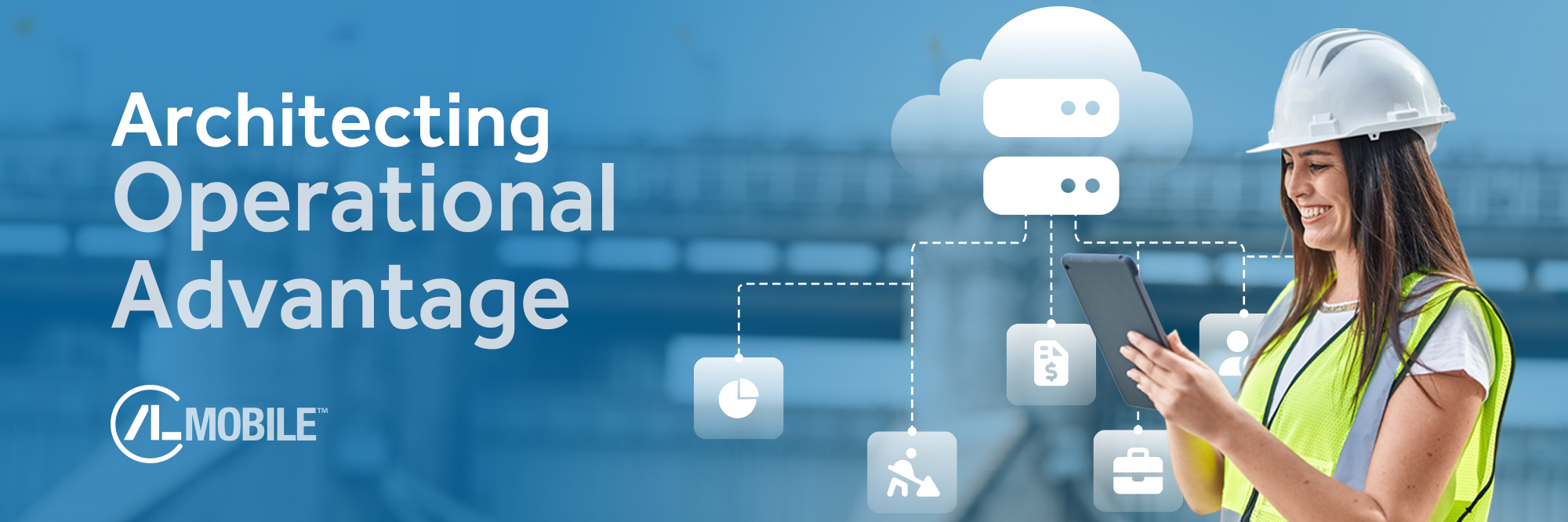
A platform company does not want to roll out a different field system at every acquisition. ALMobile runs one cloud-based platform across every OpCo, with multi-tenant architecture, role-based access, and SCIM provisioning that lets IT push or pull users as the portfolio changes. When an OpCo gets added, it gets added to the platform, not to a six-month integration project.
The V13 API portal handles the part that actually matters at scale. The portfolio keeps its ERPs, its HCMs, and its project management systems. ALMobile connects to them rather than asking anyone to rip and replace. That is the only realistic path across a portfolio where standardization at the ERP layer is usually a non-starter.
IT Involvement: Architecture, Security, Ecosystem
PE-backed platforms run lean IT teams with a heavy mandate. They want SOC 2 Type II. They want SSO and MFA, native support for Entra and Okta, SCIM provisioning, and RBAC. They want a centralized security and compliance dashboard, geo-fencing, IP access controls, and audit logging they can show to the operating partner. V13 ships all of that as a single integrated identity platform, not a set of bolt-ons.
On the ecosystem side, the API portal is the answer to the question every PE IT lead asks. Yes, we connect to the ERP you just inherited with the last acquisition. Yes, we support the HCM the platform company already runs. Yes, there is a documented integration pattern and a published API, not a promise that the vendor will build it someday.
The Productivity Math
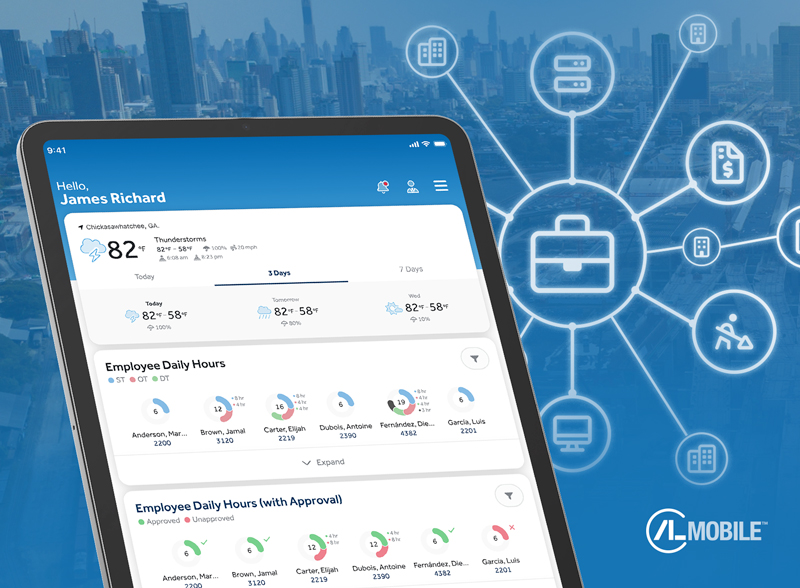
The financial case is straightforward. Time automation saves 5 to 7 percent of payroll for a typical construction contractor. Production tracking, layered on top, saves another 5 to 7 percent of the job budget by catching cost overruns while the crew is still on site. Across a portfolio running hundreds of millions or billions of dollars of annual work, that math is the story. It is also the reason PE firms should care about a productivity intelligence platform, not just a time tool.
A Real Example
ArchKey is a PE-backed electrical platform company that runs ALMobile across multiple operating companies. The value is not that each OpCo got a new time app. The value is that field labor and cost data flow into the portfolio on one platform, with one security model, one contract, and one set of integrations. That is what portfolio-level standardization actually looks like on the field side of the business.
The Point
PE is not really investing in construction companies. It is investing in the ability to operate them as a platform. That requires software built for predictability, scale, and architectural control. Public vendors optimize for the quarter. ALMobile optimizes for the hold. That is the difference, and for a PE-backed construction platform, the difference is financial.
To see what a portfolio-level rollout of ALMobile looks like, schedule a walkthrough at almobile.com.