We spent three days at CFMA 2026 talking to construction CFOs, controllers, and operations leaders about the software their crews use every day to track time, log production, and report from the jobsite. Most of them are actively planning to replace what they have.
The Same Complaints, Across Very Different Companies
The frustration we heard was remarkably consistent. Contractors running legacy platforms like B2W said the tools feel outdated and the vendor has stopped investing in the mobile experience. Contractors who moved to newer startup solutions said the opposite problem: the product changes constantly, the roadmap chases whatever the latest investor pitch requires, and their project managers actively dislike using it. Different tools, same result. The field crews absorb the friction, and the back office spends time cleaning up data that should have been right the first time.
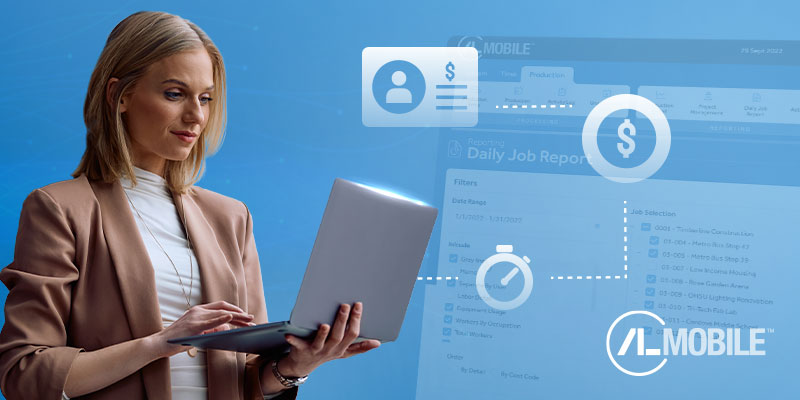
The deeper issue in almost every conversation was data flow. Time entry that does not connect cleanly to payroll and job costing creates real cost. One CFO told us their team spends hours every week reconciling field data against their accounting system because the integration never worked right. When your jobsite intelligence platform cannot talk to your back office, that is not a technology problem. That is a payroll problem and a job costing problem.
Contract Timing Is Forcing the Decision
What makes this moment different from general dissatisfaction is timing. A large wave of multi-year time and attendance contracts signed in 2023 and 2024 are hitting renewal windows in the next 6 to 12 months. Companies that have been frustrated for a while now have a practical opening to make a change without paying termination fees or running parallel systems.
The CFOs and controllers we spoke with at CFMA already know the renewal is coming. They already know the field teams are unhappy. The question they are trying to answer is what to look for in the replacement, and how to make sure the next contract does not end the same way.
What to Evaluate When You Have the Window
Does field data actually reach your accounting system?
This was the question that came up most at CFMA, even when people did not phrase it directly. Vista and Spectrum were the most common accounting platforms in the room, with SAP and a few homegrown systems in the mix. Every one of those companies needs time and attendance data to flow into payroll and job costing without manual intervention. If your current platform requires CSV exports, manual re-entry, or a middleware layer that breaks every time someone updates a cost code, that is a cost you pay every single pay period. Ask the vendor to show you the integration with your specific accounting system. Not a demo environment. Yours.
Is the mobile experience built for crews, or for a sales demo?
A lot of time and attendance software is designed top-down: built for the back office and pushed to the field. That shows up in how many taps it takes to clock in, how the app behaves with poor cell coverage, and whether foremen can actually run their crews through it without calling the office. If your PMs and superintendents dislike the tool, that is not a training problem. The software was not built for how work actually happens on a jobsite.

What happens to the data once it is collected?
Clean field data is the foundation for everything else: labor cost reporting, job budget tracking, equipment utilization, and eventually the analytics and AI capabilities that every vendor is promising. But none of that works if the data coming off the jobsite is incomplete, late, or stuck in a system that cannot share it. The question is not just “does it collect time.” The question is whether that data flows into reporting and decision-making without someone in the office rebuilding it in a spreadsheet.
Who controls the product roadmap?
This one matters more than most buyers realize until they are two years into a contract. Publicly traded vendors build for quarterly earnings. VC-backed startups build for the next funding round. In both cases, the product direction can shift away from construction contractors without warning. Privately held companies that serve one industry have a different incentive structure. Ask who is driving the roadmap, who the product is being built for, and whether that answer will be the same in three years.
Can you quantify the cost of staying?
Switching costs are real, but the cost of staying on the wrong platform is usually higher and harder to see. Contractors using the right jobsite intelligence tools typically find 5 to 7 percent in payroll savings from accurate time capture alone, plus another 5 to 7 percent in job budget accuracy from real-time production data. If your current platform is not delivering those numbers, the gap between what you are paying and what you could be saving grows every month you wait.
The Window Is Open Now
The contractors we met at CFMA are not browsing. They have a renewal date, a frustrated field team, and a CFO who wants better data flowing into the back office. If that sounds familiar and your contract is coming up in the next year, start the evaluation now. Not three months before the renewal hits your desk.
ALMobile V13 was built for contractors who need jobsite intelligence that works the way their crews actually work, with direct integrations into Vista, Spectrum, and the accounting systems construction runs on. If you are evaluating your options, we are happy to show you what it looks like connected to your environment.